The background image of this blog doesn’t look like the Sputnik you’re familiar with, does it? And everyone knows what Sputnik is, right?
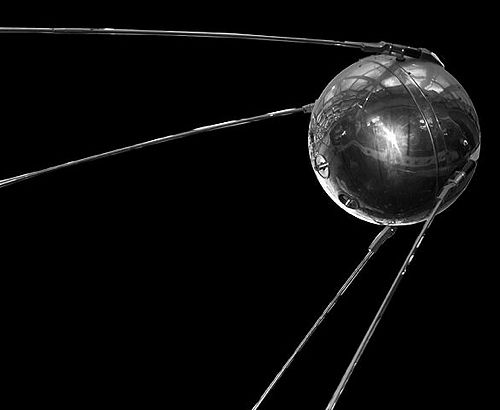
The Sputnik series of spacecraft was the USSR’s most serious challenge to Western technical superiority, yet millions of American children—including my uncle—had spiky Sputnik-themed radios by their bedside.

An early U-2 (CIA) image of the launch pad at Baikonur
Sputnik, or “Спутник” merely means “satellite” in Russian. The word refers to the family of the Soviet Union’s earliest spacecraft, although some of these designations were only used in the West. The Russians were super-secretive about stuff like the official names of their vehicles, along with things like:
- The location of the Baikonur cosmodrome. The town it was named after is over 100 miles from the launch facilities.
- Pretty much every detail of Yuri Gagarin’s 1961 spaceflight, including the fact that he parachuted out of the capsule.
Speaking of Gagarin’s spacecraft–the first to carry a human into earth’s orbit–it was known by multiple names, among them Vostok 1, 00103, and, yes, Sputnik 11.

Yuri was one lucky guy. Like Laika the dog, he got to go into outer space. Unlike Laika, he got to come home.
So the satellite you know as “Sputnik” is actually Sputnik 1. The image you see in the background is, of course, Sputnik 11. As for why I selected it as the name for this blog, that’s another story.
 Sputnik 11
Another thought:
In his 2011 State of the Union address, the President used the phrase ‘Sputnik Moment.’ He was drawing a parallel between the space exploration initiatives Eisenhower launched to counter the Soviets, and the medley of the clean energy and public works programs he proposed. At least in the public’s consciousness, the expression has outlived the initiatives it was coined to promote. I’m not surprised, as it’s a great turn of phrase.